
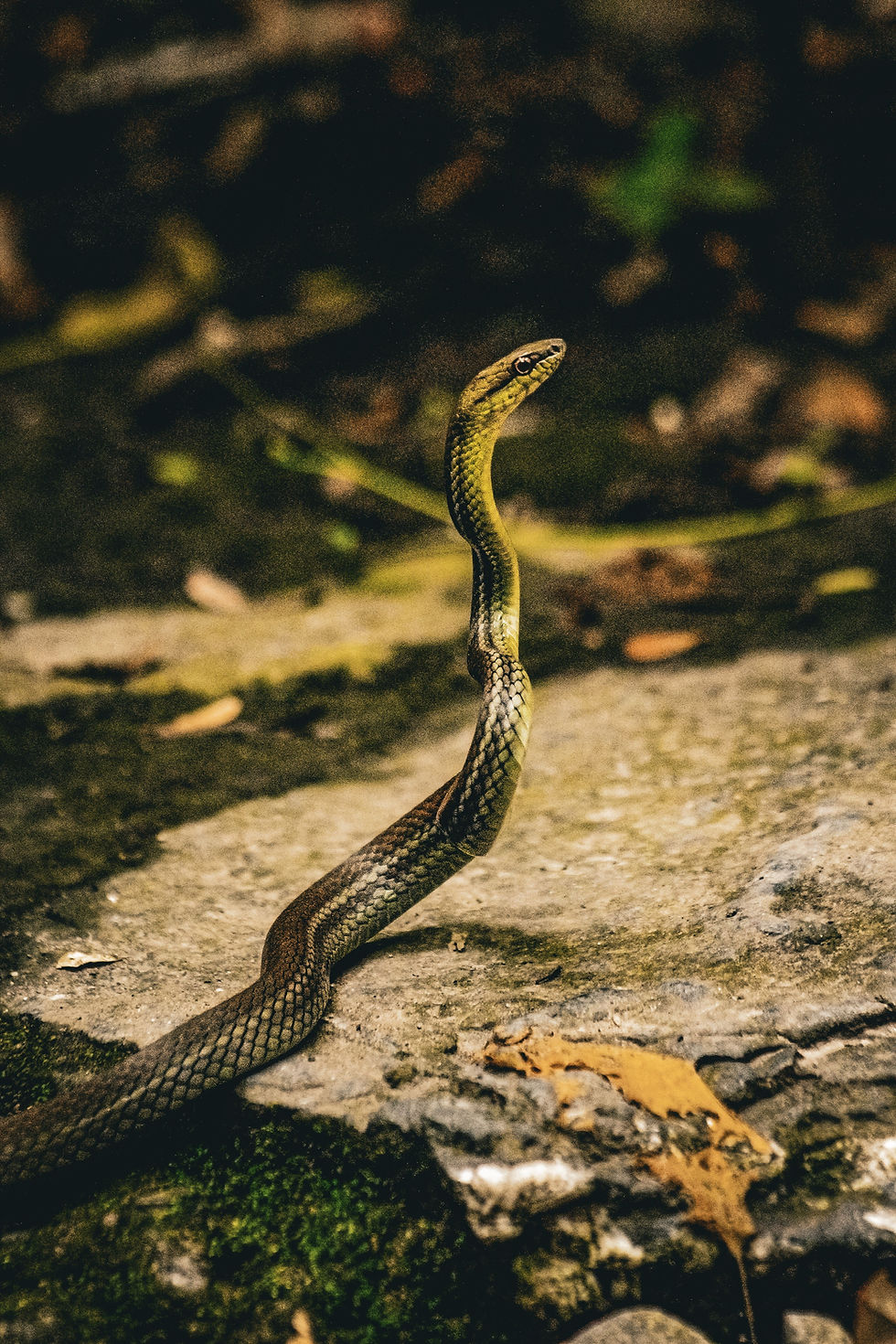
Snakes
Facts
North Carolina has 37 species of snakes, and only six are venomous: copperhead, cottonmouth, timber rattlesnake, pigmy rattlesnake, eastern diamondback rattlesnake, and eastern coral snake.
Most snakes are not looking for trouble. They play an important role by controlling mice, rats, and other small animals. A snake around the home may be a sign that the property is offering food, shelter, or access.
Snakes are cold-blooded, which means they depend on outside temperatures to regulate their body heat. That is why they may sun on warm surfaces or hide in cool, shaded areas depending on the weather.
Signs of Snakes
-
Shed skins in a garage, shed, crawlspace, or basement
-
Snakes repeatedly seen near the home
-
Rodent activity nearby
-
Open crawlspace doors or damaged vents
-
Gaps around the foundation
-
Tall grass, wood piles, brush piles, debris, or clutter close to the house
Risks
Most North Carolina snakes are nonvenomous, but venomous snakes are present in the state. The risk increases when people try to grab, kill, corner, or identify snakes up close. Even nonvenomous snakes can bite if handled.
Snake activity around a home can also point to another problem: rodents. If mice or rats are present, snakes may continue showing up. Open crawlspaces, damaged vents, foundation gaps, tall grass, and debris near the house can make the area more attractive to snakes.
what we do
We inspect crawlspaces, foundation gaps, vents, and nearby attractants. We also look for rodent activity and recommend exclusion or cleanup steps to help make the property less inviting.