
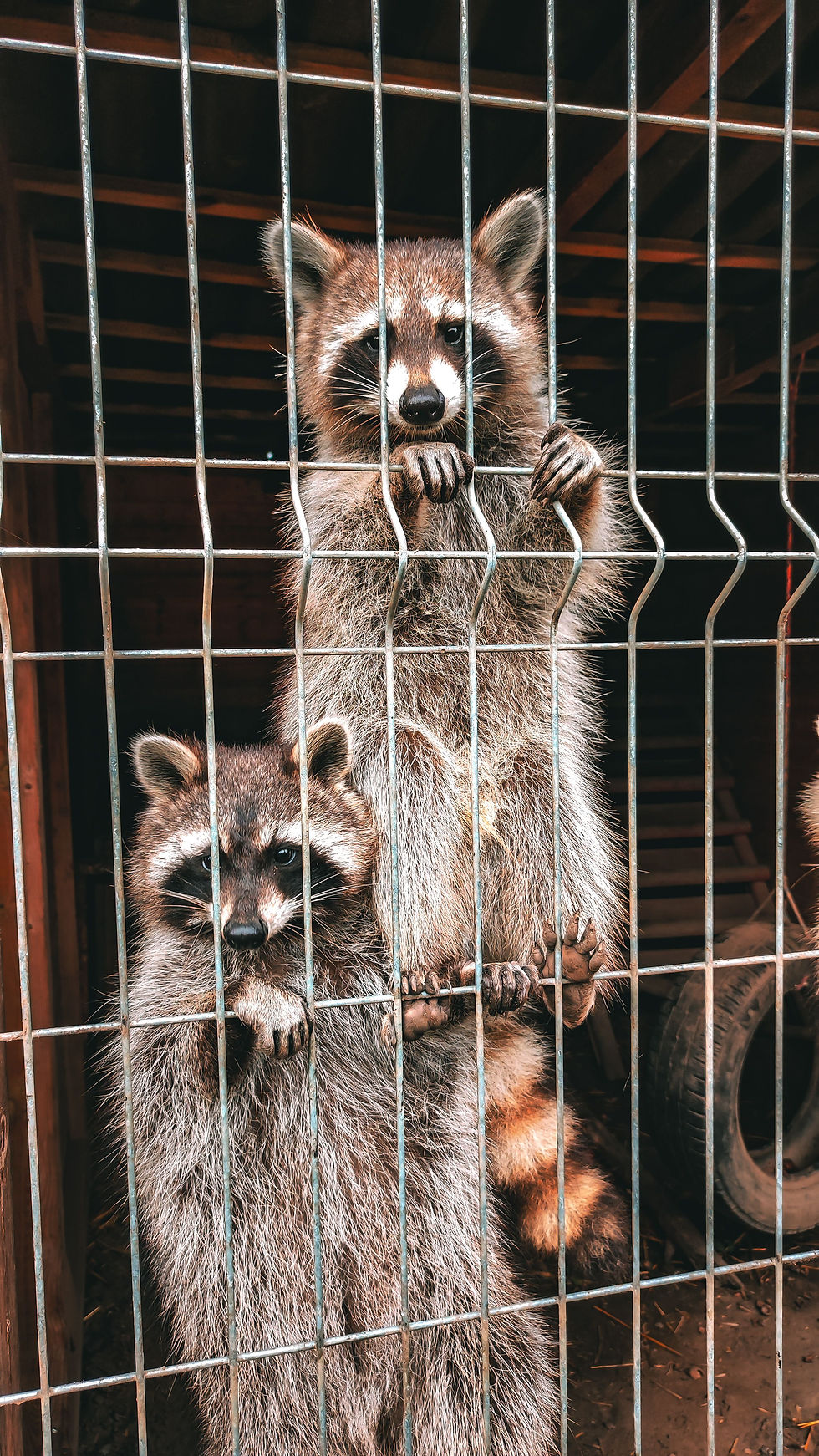
Racoons
Facts
Raccoons are one of the smartest animals in North Carolina. They are known for their black mask, ringed tail, and extremely sensitive front paws. Their paws help them feel, grab, climb, pull, tear, and manipulate objects.
Raccoons are strong and persistent. They can tear into weak vents, soffits, shingles, crawlspace doors, chimney areas, roof returns, and fascia boards. They are also excellent climbers and can use trees, fences, decks, and rooflines to reach entry points.
Raccoons are mostly active at night. If you hear loud walking, thumping, dragging, or heavy movement in the attic after dark, it may be a raccoon.
Signs of Racoons
-
Loud thumping, walking, or dragging sounds at night
-
Large, rough openings near the roofline, soffit, chimney, or vents
-
Damaged shingles, torn vents, or ripped fascia
-
Trash cans being tipped over or opened
-
Large droppings around the property
-
Noises in the attic, chimney, crawlspace, or walls
-
Chattering, crying, or movement from young animals
rISKS
Raccoons can cause serious damage inside a home. They can crush insulation, tear ductwork, damage vents, rip building materials, contaminate attic spaces, and create strong odors with urine and droppings.
Raccoon droppings are a major concern. North Carolina Wildlife warns about raccoon roundworm, a parasite that does not harm raccoons but can affect humans or other animals if infectious eggs are ingested. Once ingested, larvae can travel through the body and affect organs and muscles.
Raccoons can also become defensive, especially if young are present. A mother raccoon in an attic, chimney, or crawlspace should not be cornered or handled by a homeowner.
wHAT WE DO
We inspect the structure, locate the entry point, determine whether young may be present, remove or exclude the raccoon properly, and repair the access point. When needed, we also address contaminated areas and damage.
